
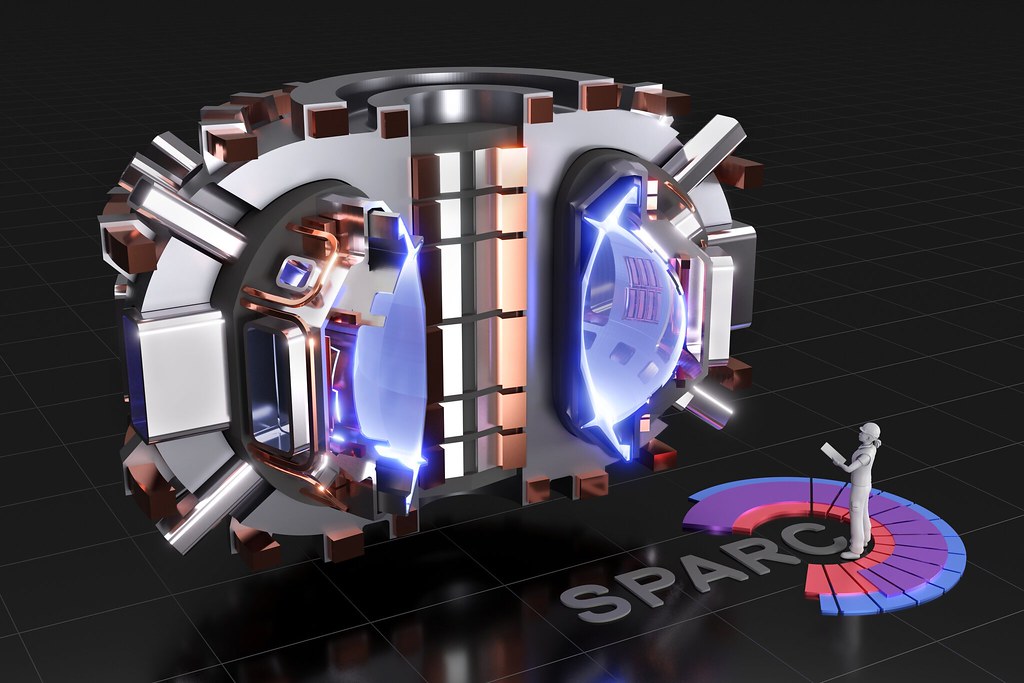
The Energy Department's Advanced Research Projects Agency will invest $135 million over the next 18 months to accelerate fusion energy development—a record commitment for the agency. Yet the announcement, disclosed exclusively to Axios, comes amid a troubling contradiction: while ARPA-E ramps up support, the Trump administration's 2027 budget proposal would slash the broader Energy Department's fusion energy sciences initiatives from $805 million to $755 million, creating a strategic incoherence as the U.S. competes globally in clean energy innovation.
The funding announcement, set for Wednesday, represents the largest single fusion investment in ARPA-E's history and underscores the potential of targeted public investment in breakthrough technologies. Over the past 12 years, ARPA-E has spent $134 million on fusion research, which has catalyzed $1.5 billion in private sector investment—a 10-to-1 return demonstrating how strategic federal spending can unlock private capital and accelerate innovation.
The Strategic Contradiction
Andrew Holland, head of the Fusion Industry Association, highlighted the fundamental problem with the administration's approach. "To have one bureau increasing funding while another is cutting is no way to beat China to commercial fusion," Holland told Axios. The stakes are substantial: the Chinese government is spending at least $6.5 billion on fusion development, according to analysis Holland has cited, compared with approximately $1 billion from the entire U.S. government. This spending gap threatens American competitiveness in a technology that could reshape global energy systems.
The proposed cuts to the Energy Department's fusion energy sciences initiatives—a $50 million reduction—would undermine the broader ecosystem that ARPA-E's targeted investments are designed to strengthen. While the agency's mission is to leverage private dollars through relatively smaller public bets on high-risk technologies, that model depends on a robust federal foundation across multiple research initiatives.
Government Support and Market Dynamics
Conner Prochaska, director of ARPA-E, defended the agency's approach in an interview Tuesday, arguing that the combination of venture capital, private investment, and federal spending can match China's pure government expenditure. "I personally take our combination of capital, venture capital and investments from the private sector, along with government spending …versus that pure government spend in China any day of the week," Prochaska said.
Holland acknowledged ARPA-E's critical role in catalyzing private fusion investment. "It's not an exaggeration to say that much of the growth in private fusion investment and ambition can be traced back to ARPA-E," he said. However, he emphasized that the new $135 million commitment, while welcome, is insufficient. "It's not nearly enough. We need the broader DOE to step forward," Holland stated.
The new funding will focus on tackling technical barriers that have prevented fusion from reaching commercial scale, supporting multiple fusion technologies already in development across the private sector.
Cautious Timelines
Energy Secretary Chris Wright's recent comments add another layer of uncertainty. Speaking at the ARPA-E conference Tuesday evening and later on the Katie Miller podcast, Wright expressed skepticism about fusion's near-term commercial viability. He said a commercial pathway might be identified within five years, but electricity generation for the grid could take 10 to 20 years. "I went to work on it 40 years ago, and we thought it was 10 or 20 years away then," Wright said, acknowledging the persistent challenge of fusion development timelines.
Prochaska declined to comment on the proposed cuts to other parts of the department's budget. The administration's budget proposal requires congressional approval, and the White House's Office of Management and Budget did not immediately respond to requests for comment about the budgetary contradictions.
Why This Matters:
Federal investment in fusion energy represents a critical test of how governments can support transformative technologies that markets alone may not develop at necessary speed. The $135 million ARPA-E commitment demonstrates the proven effectiveness of targeted public spending in unlocking private capital and accelerating innovation. However, the simultaneous proposed cuts to broader Energy Department fusion initiatives reveal a strategic incoherence that could undermine long-term competitiveness. As China invests $6.5 billion to America's $1 billion, the U.S. faces a choice about whether it will sustain the coordinated public-private approach that has historically driven energy breakthroughs. The contradiction between ARPA-E's expansion and other program cuts suggests the administration has not settled on a coherent strategy for maintaining American leadership in clean energy innovation—a gap that could have lasting consequences for both climate goals and economic competitiveness.