
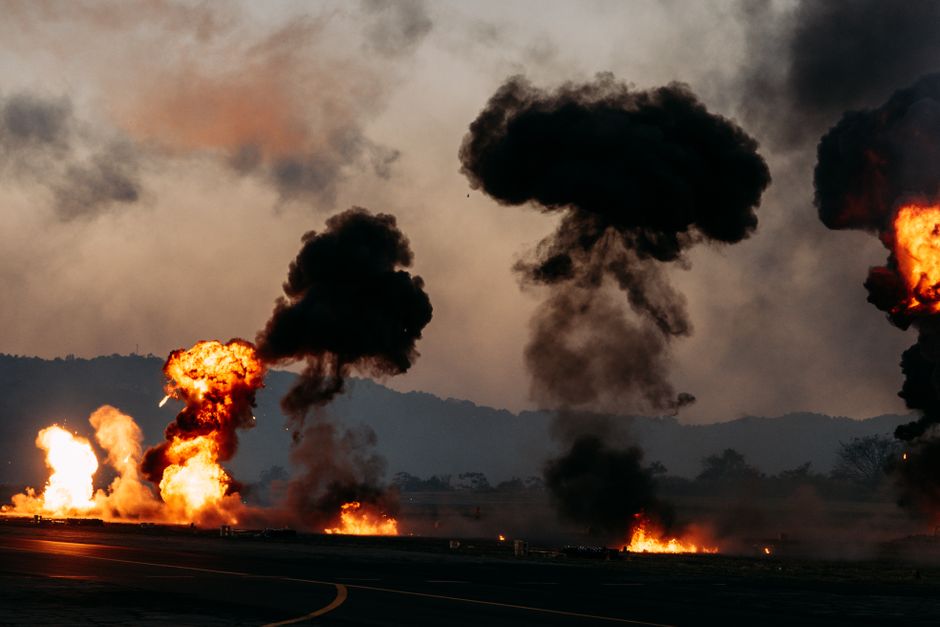
Explosions rocked Damascus and its surrounding countryside on Tuesday, April 7, 2026, as regional tensions escalated hours before a critical US deadline for Iran to reopen the Strait of Hormuz, according to Syrian state television and multiple Israeli news sources.
Haaretz reported the blasts were caused by Israeli air defenses intercepting Iranian missiles, while The Times of Israel, citing Reuters, said the cause remained unknown at the time of reporting. The conflicting accounts underscore the fog of war surrounding the expanding regional conflict.
Escalating Regional Security Threats
The Damascus explosions occurred as the Israel Defense Forces assessed there could be increased fire toward Israel in the coming hours, with US President Donald Trump's 8 p.m. EST deadline for Iran approaching. Trump had warned that "a whole civilization will die tonight, never to be brought back again" if Iran did not agree to his demands.
The day's events unfolded across multiple regional flashpoints. Five explosions were heard in central Baghdad near the US embassy, while blasts also struck the Qatari capital Doha. The UAE Ministry of Defense announced on X that "The UAE's air defenses are currently dealing with missile and drone attacks coming from Iran."
Iran's First Vice President Mohammad Reza Aref wrote on X that Iran was prepared for all possibilities, stating, "National security and infrastructure sustainability are the subject of our precise calculations. The government has finalized the necessary measures in detail for all scenarios. No threat is beyond our preparedness and intelligence."
Diplomatic Efforts Amid Crisis
Pakistan's Prime Minister Shehbaz Sharif requested Trump extend the Iran deadline by two weeks, calling for a corresponding truce period. "To allow diplomacy to run its course, I earnestly request President Trump to extend the deadline for two weeks," Sharif wrote, adding, "Pakistan, in all sincerity, requests the Iranian brothers to open Strait of Hormuz for a corresponding period of two weeks as a goodwill gesture."
Sharif urged "all warring parties to observe a ceasefire everywhere for two weeks to allow diplomacy to achieve conclusive termination of war, in the interest of long-term peace and stability in the region," saying efforts to end the conflict were "progressing steadily, strongly and powerfully."
White House press secretary Karoline Leavitt said Trump had been made aware of the request and that "A response will come."
Home Front Preparedness
The IDF said it was prepared to both defend and attack and would update the public if Home Front Command guidelines changed. The Times of Israel identified the coverage as part of Israel-Iran War Day 39.
Amy Spitalnick, CEO of the Jewish Council for Public Affairs, issued a statement saying, "We know what it means when leaders call for communities and populations to be wiped out. Any suggestion that this advances Jewish or Israeli safety is simply an exploitation of our community to advance horrific war crimes and the President's broader extreme anti-democratic agenda." She said people should recognize "multiple truths" that Iran's government is repressive and dangerous, and that the Trump administration is increasingly flouting its constitutional and humanitarian obligations.
Pope Leo called threats against Iran "unacceptable" and urged citizens worldwide to contact their political representatives to bring the expanding regional conflict to an end.
Why This Matters:
The Damascus explosions and simultaneous attacks across the region demonstrate how rapidly the conflict is expanding beyond Israel's borders, threatening critical infrastructure and civilian populations across multiple nations. The uncertainty surrounding attribution of the Damascus blasts highlights the intelligence challenges facing military planners and the risk of miscalculation. With Iran demonstrating both the capability and willingness to strike targets from Baghdad to the UAE, the security architecture of the entire Middle East faces unprecedented strain. Pakistan's diplomatic intervention reflects growing international concern that the conflict could spiral beyond containment, threatening global energy markets and maritime commerce through the Strait of Hormuz. The IDF's heightened alert status and Iran's stated preparedness for "all scenarios" suggest both sides are positioned for further escalation, raising the stakes for American credibility and regional stability as the deadline approaches.