
Visitors can leave offerings at Gloria Molina Grand Park’s community altar during a free Día de los Muertos exhibition running Oct. 24 through Nov. 2. The altars honor departed loved ones and living community connections, as residents, students and community groups shape what people encounter in the downtown civic space.
Who Shapes the Civic Space
The 2026 presentation of Downtown Día de los Muertos turns Gloria Molina Grand Park into what the event describes as an illuminated, sacred civic sanctuary. The program includes a sacred processional and blessings by Ohtli Yollotl honoring Indigenous roots, plus face-painting, sugar skull workshops and wellness offerings from community partners such as the Children's Institute. Participants can leave something at the community altar.
The exhibition’s altars remember people who have died, including former Los Angeles Supervisor Gloria Molina, artist Betye Saar and former employees of the Los Angeles Department of Water and Power. These aren’t just names in an official program: the altars honor people whose lives mattered to their communities. The article doesn’t identify who funded the event or give further details about services from the Children's Institute; it describes the partner’s contribution as wellness offerings.
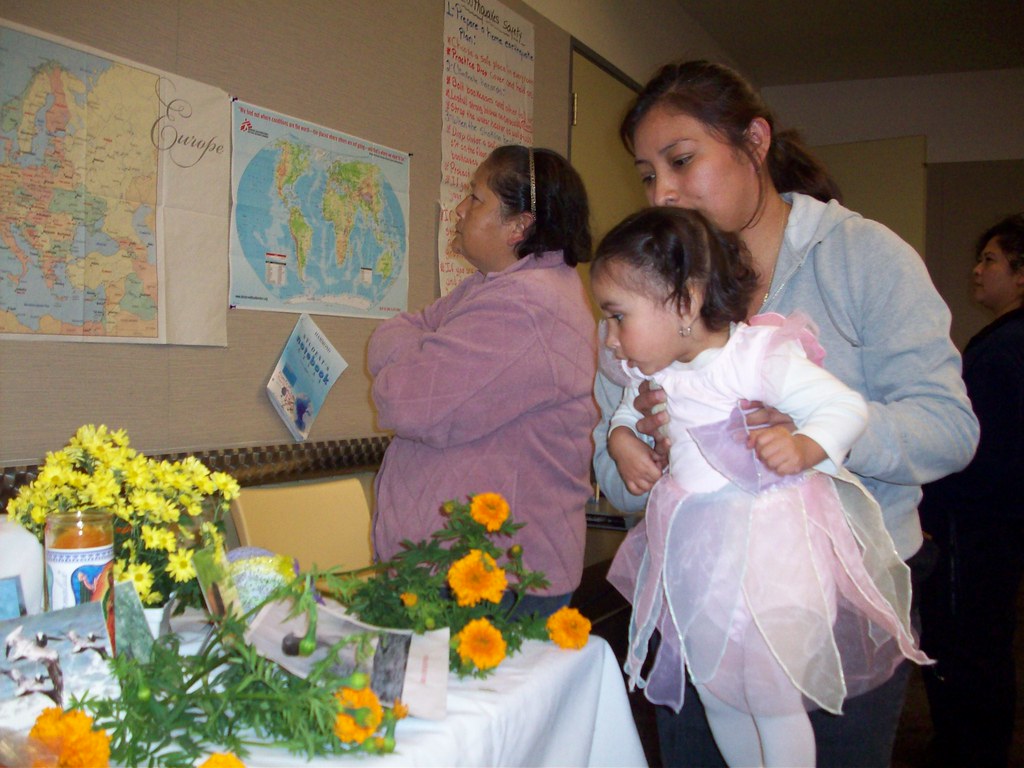
Día de los Muertos is a Mexican holiday observed every Nov. 1 and 2. The article says people believe ancestors’ spirits return to visit the living. Ofrendas, or offerings, are built at gravesides or at home with pictures, loved ones’ favorite foods, water, salt, candles and marigolds to guide the spirits home. The park’s invitation to leave something at the community altar brings that practice into a shared public setting.
The People Behind the Altars
At the official opening, Antonio Verduzco smiled behind calavera makeup while staffing the Generaciones en Accion altar. Panorama High School teacher Manny Velazquez, 67, propped up a La Catrina figure his students created. Consuelo G. Flores, altar artist and curator of the Gloria Molina Grand Park Día de los Muertos altars, wore La Catrina makeup in front of her community altar.
Visitors and participants filled out the scene. Lisa Markidis smiled after having her face painted with La Catrina makeup. David Dunlop, visiting from Carpinteria, took a picture framed by The Wall Las Memorias altar. Diane Zuniga, with Ohtliyollatl Collective, burned sage to bless the opening. Jesus Rios filmed the La Catrina that Panorama High School students made, while Jair Hernandez attended in his best Azteca outfit.
The source describes community participation and cultural offerings, not an election campaign, legislative proposal or policy remedy. It gives no funding details for the institutional partner, either. The account centers on people making altars, sharing practices and gathering around memories in the park.
In Denver, a CBS Colorado video carries the title “Día de los Muertos celebration brings culture, music to Denver's Civic Center Park.” The fetched page provided that title but no further details about the celebration. The available account, then, offers no basis for describing Denver’s participants, organizers or activities beyond the title.
At Gloria Molina Grand Park, the concrete details are the offerings, blessings, workshops and altars made in memory of specific people. The exhibition provides the setting; community members and students give the altars their form and meaning.
- día de los muertos
- los angeles
- denver
- gloria molina grand park
- cultural celebrations
- community altars
- mexican holiday