
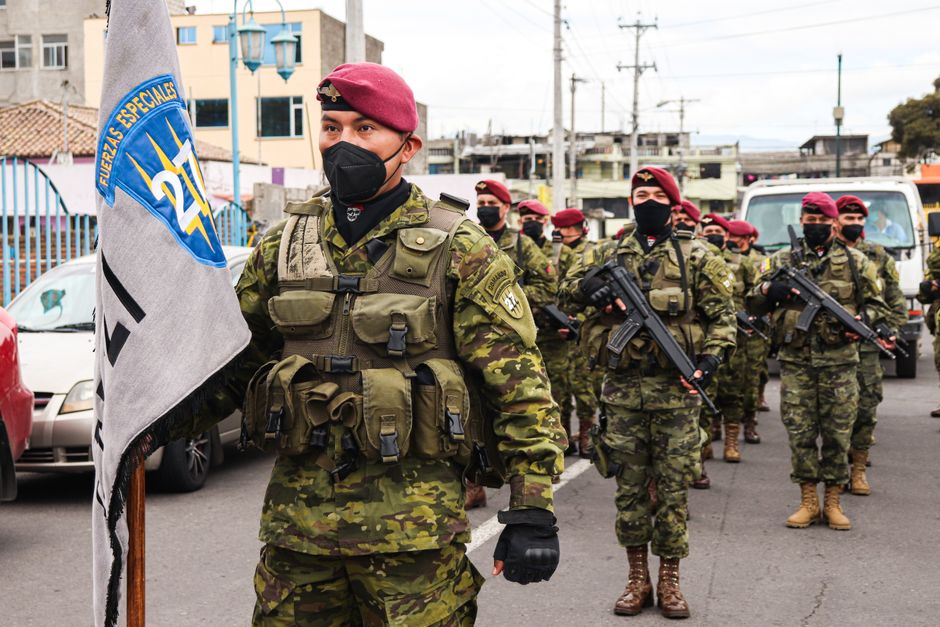
Ecuador has achieved a remarkable 35% reduction in crime across its border provinces, demonstrating the effectiveness of decisive military action in combating criminal violence that has plagued the nation's frontier regions. The dramatic decline in criminal activity comes as the government has deployed military forces to restore order and security in areas long troubled by drug trafficking, gang violence, and cross-border criminal enterprises.
The South American nation's border provinces have historically served as corridors for illicit activities, with criminal organizations exploiting porous borders to conduct drug trafficking operations and other illegal enterprises. The recent military intervention represents a significant shift in Ecuador's approach to law enforcement, moving beyond traditional policing methods to employ military resources in the fight against organized crime.
Decisive Action Yields Results
The 35% crime reduction stands as tangible evidence that robust security measures can produce measurable improvements in public safety. Government officials credit the military operations with disrupting criminal networks, establishing greater territorial control, and creating conditions that allow legitimate economic activity to flourish. The success of these operations demonstrates that when governments commit adequate resources and political will to security challenges, meaningful progress becomes achievable.
This approach reflects a growing recognition across Latin America that traditional law enforcement alone may be insufficient to counter well-armed, well-funded criminal organizations. By leveraging military capabilities—including superior training, equipment, and organizational structure—Ecuador has managed to reclaim territory previously dominated by criminal elements.
Regional Implications and Economic Benefits
The crime reduction in Ecuador's border provinces carries significant implications for regional stability and economic development. Lower crime rates create an environment more conducive to business investment, cross-border trade, and tourism. Legitimate businesses that previously operated under the shadow of criminal extortion and violence can now function with greater confidence and security.
The military operations also send a strong message to criminal organizations that the government possesses both the capability and determination to enforce the rule of law. This deterrent effect may prove as valuable as the immediate tactical successes, potentially discouraging criminal activity before it occurs.
For border communities that have endured years of violence and instability, the 35% crime reduction represents more than statistics—it translates into safer streets, reduced fear, and restored hope for the future. Families can conduct daily activities without the constant threat of violence, and children can attend schools without navigating dangerous criminal territories.
Sustainable Security Framework
The challenge moving forward will be maintaining these gains and ensuring that military operations transition into sustainable security frameworks. While military intervention can achieve rapid results, long-term security requires building institutional capacity within civilian law enforcement, strengthening judicial systems, and addressing underlying socioeconomic factors that create environments where criminal organizations recruit and operate.
Ecuador's experience may offer valuable lessons for other nations grappling with similar security challenges, demonstrating that coordinated military operations, when properly executed, can achieve significant reductions in criminal activity.
Why This Matters:
Ecuador's 35% crime reduction in border provinces validates a fundamental principle that center-right governance emphasizes: the primary responsibility of government is protecting citizens and maintaining public order. When governments fail to provide basic security, all other aspects of civil society suffer—economic development stalls, individual freedoms diminish, and communities cannot flourish.
This success story demonstrates that decisive action, backed by adequate resources and clear objectives, can overcome even entrenched criminal threats. Rather than accepting crime as an inevitable reality or relying solely on social programs to address root causes—approaches that often yield slow or uncertain results—Ecuador chose direct intervention to immediately reduce the threat to its citizens.
The economic implications are substantial. Reduced crime creates conditions for entrepreneurship, attracts investment, and allows market forces to operate without the distortion of criminal extortion and violence. Border regions can now participate more fully in legitimate commerce, generating tax revenue and employment opportunities that strengthen both local communities and the national economy.
Furthermore, this achievement underscores the importance of national sovereignty and border security. Effective control of border regions prevents criminal organizations from exploiting weak governance to conduct transnational crimes. The military's success in these operations demonstrates that nations possess the tools necessary to secure their territories when political leadership commits to that objective.
For policymakers worldwide facing similar challenges, Ecuador's experience offers evidence that security-first approaches, when properly implemented, can achieve rapid, measurable improvements in public safety—creating the stable foundation necessary for all other aspects of societal progress.