
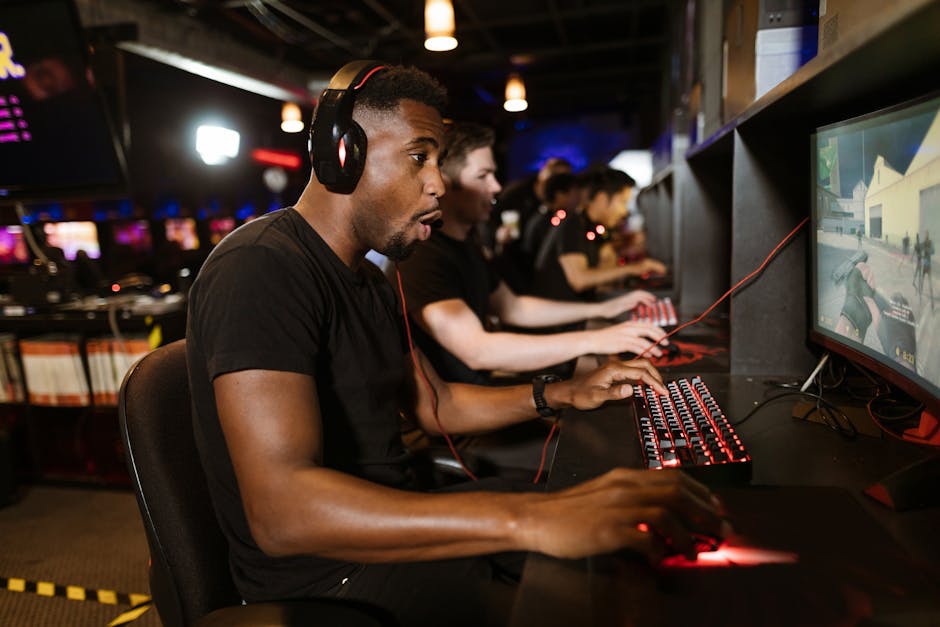
While the global esports sector promises "huge amounts of money" for a select few, the African esports scene remains largely unmonetized, with its "gruelling" growth fueled by the "passion for impact" of its participants, according to Mshikilwa, President of the Esports Federation of Tanzania. The sector's expansion is primarily driven by the growth of mobile infrastructure and the widespread availability of mobile devices, yet monetization continues to be a significant challenge. Mshikilwa noted that content creators earning revenue through brand partnerships represent the only "silver lining" in the current financial landscape.
The Promise of Capital
The global esports industry, with its associated career paths, has spurred educational systems worldwide to incorporate competitive gaming into their curricula, aiming to cultivate "future-ready skill sets." Kunmi Adenipebi, Founder and CEO of Game Evolution, stated that creating grassroots awareness of how esports benefits various ecosystems in Nigeria is essential for "unlocking wealth generation, careers and education beyond traditional means." However, Michele Magro, President of the Malta Esports Association, cautioned that while some professional esports players "make a huge amount of money," this represents only a "small percentage" of participants. Magro emphasized the need for "realistic expectations" regarding professional play. Mags Byrne, Founder and CEO of Estars, highlighted the role of capital in education, noting that Estars has partnered with The Open University (UK) to provide Continuing Professional Development (CPD) courses for lecturers to teach esports skills.
The State's Role in Managing Expectations
The state has begun to formalize its involvement in the nascent esports sector, framing it as a tool for "cognitive development" and "academic excellence." Bashir Are, CEO of the Lagos State Lottery and Gaming Authority (LSLGA), unveiled a strategic plan to introduce esports to approximately three million students. This initiative aims to embed competitive play into the study of mathematics, specifically algebra, and psychology. Adenipebi observed that "in most countries, whatever sector the government is involved with easily thrives," pointing to the formation of the Esports Federation "for the past year" as a step towards monitoring and assisting growth. The consensus among panellists at the All African Gaming Expo (AGE) indicated that "government recognition marks a turning point" for the continent, positioning Nigeria and its African counterparts to transform gaming passion into an "engine for economic and social mobility."
Labor's Precarious Future
Despite the rhetoric of "workforce development," the sector faces "unique challenges," with growth on the local scene described as "gruelling" and often sustained by "passion for impact." Adenipebi attributed "limitations that we’ve been having for at least a decade" to a lack of "proper infrastructure, at least from the government." Magro suggested that esports should be viewed primarily as a "powerful tool for youth empowerment," encouraging engagement in tasks that might otherwise be ignored. Magro stated that the impact of esports would be reflected in "teamwork, practice, dedication and skill acquisition applied in any area of their chosen career paths," rather than guaranteed professional employment. The article concludes that while "infrastructure and monetisation remain significant hurdles," the shift towards structured education and state recognition is seen as a pathway to "economic and social mobility," a promise often extended to a workforce facing limited opportunities.