
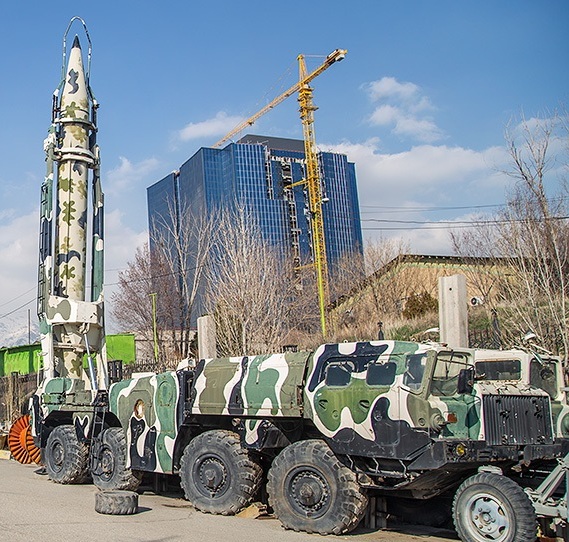
Iran launched a major missile salvo toward Israel on April 2, 2026, as former US President Donald Trump claimed Iran was "no longer a threat," underscoring the ongoing security crisis in the Middle East. The Israel Air Force struck 400 Iranian targets over two days, demonstrating the scope of military operations required to counter Iranian aggression. Iran's attacks also caused fires in Kuwait and Bahrain on April 2, 2026, extending the conflict's reach beyond Israeli territory.
Escalating Military Operations
The Israel Defense Forces issued an evacuation order for Tehran on June 16, 2025, 10 months and 17 days ago, in anticipation of potential strikes. On April 1, 2026, one day ago, Iran fired a major missile salvo ahead of the Passover holiday. Initial reports indicated approximately 10 ballistic missiles were fired, marking one of the most significant barrages from Iran in recent weeks. The IDF chief warned of a manpower crisis as military operations intensified.
The IDF killed a senior Quds Force operative and struck an Iranian regime chemical manufacturer on April 1, 2026. The IDF struck a factory that transferred chemical substances used in the Iranian regime's development of chemical weapons on Tuesday, April 1, 2026. An Apache helicopter fired a missile toward Lebanon near the Israeli-Lebanese border in northern Israel on March 30, 2026, three days ago.
Regional Impact and Economic Concerns
Iran expressed fears of Israel's "new strategy" following major strikes on its steel industry on April 1, 2026. Mobarakeh, described as the largest industrial company in Iran and the biggest steel complex in the Middle East, was considered a cornerstone of the country's economy. A drone attack sparked a fire at Kuwaiti Airport, and a tanker off Qatar was hit as Iran struck Gulf states on April 1, 2026. Iran also launched attacks against Qatar and Bahrain.
Birds were seen flying near the Jag Vasant vessel transferring LPG at a port after transiting the Strait of Hormuz amid supply disruptions linked to the US-Israeli conflict with Iran, in Mumbai, India, on April 1, 2026. The UAE denied a Wall Street Journal report on April 1, 2026, that it was preparing to help the US and allies open the Strait of Hormuz by force. Officials told the Wall Street Journal that the nation had already conducted an internal assessment of its capabilities to help secure the strait, including its ability to clear mines.
Diplomatic Stalemate
US President Donald Trump spoke about the Iran war from the Cross Hall of the White House on Wednesday, April 1, 2026, in Washington. US intelligence assessments indicated on April 1, 2026, that Iran was unwilling to negotiate an end to the war. Iran denied a claim by US President Donald Trump on April 1, 2026, that Iran's new leader had asked for a ceasefire. Trump had stated in a Truth Social post on Wednesday, April 1, 2026, that Iran's new leader had just asked the United States for a ceasefire.
A funeral ceremony for Islamic Revolutionary Guards Corps Navy Commander Alireza Tangsiri, who was killed in strikes amid the US-Israeli conflict with Iran, took place in Tehran, Iran, on April 1, 2026. Iranian President Masoud Pezeshkian spoke in February 2026, two months ago, on the 47th anniversary of the Islamic Revolution in Tehran, urging Americans to reject "propaganda" on Iran and calling the US Israel's proxy. Israel Air Force fighter jets were seen in central Israel on March 16, 2026, 17 days ago, amid the ongoing war between Israel-US and Iran.
Why This Matters:
The escalating conflict between Israel and Iran presents significant national security and economic implications. Iran's willingness to strike multiple Gulf states demonstrates the regional scope of the threat, while attacks on critical infrastructure like airports and energy vessels threaten global energy markets and commercial aviation. The targeting of Iran's steel industry—described as a cornerstone of its economy—and chemical weapons facilities reveals the strategic depth of Israeli operations aimed at degrading Iran's military-industrial capacity. US intelligence assessments indicating Iran's unwillingness to negotiate suggest prolonged instability, with continued costs for regional security cooperation and energy supply chains. The manpower crisis cited by the IDF chief highlights the sustainability challenges facing democracies engaged in extended conflicts against authoritarian regimes willing to absorb significant economic and human costs.