
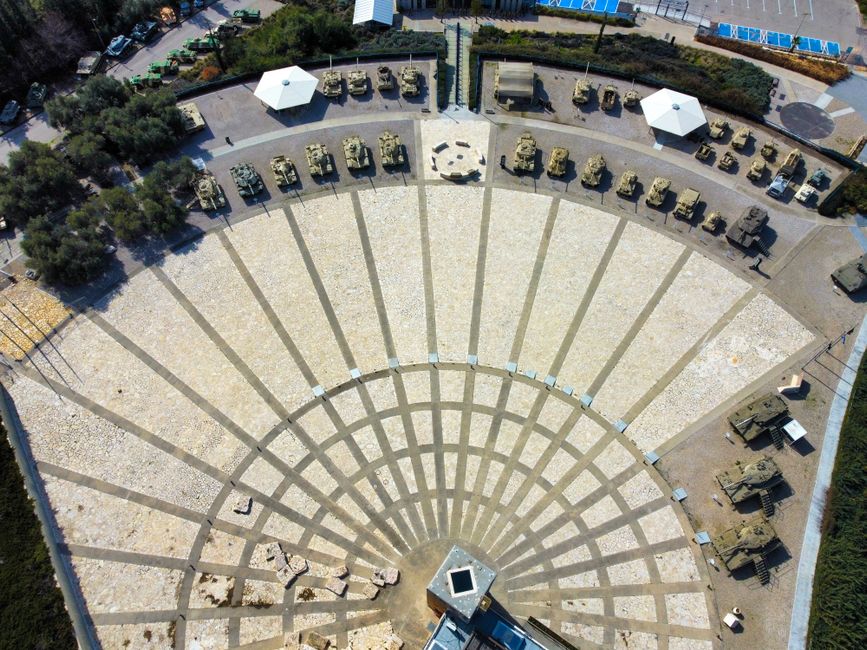
The government on Sunday approved plans to establish a new defense complex at the site of UNRWA’s former headquarters near Ammunition Hill in East Jerusalem, turning a former humanitarian office into another outpost for the defense establishment. The complex will include an IDF museum, enlistment office, and an office for the defense minister, and will be built on a roughly 36-dunam (9-acre) site intended to strengthen the defense establishment’s presence in Israel’s capital.
Who Gets the Land
According to a joint statement from the Defense Ministry and the Jerusalem municipality, the new complex is being built where UNRWA once operated, after Israel ordered the agency to vacate all its premises and cease its operations. UNRWA had not used the building since the start of last year. The move follows years of legislative measures against the UN agency, which Israel has long accused of colluding with Hamas and participating in terror activities, including the October 7, 2023, massacre.
Defense Minister Israel Katz framed the decision in the language of sovereignty and force. He said the move is "a decision of sovereignty, Zionism and security," and argued there is "nothing more symbolic or just" than establishing defense institutions "on the ruins of the UNRWA compound." Katz repeated Israeli allegations that UNRWA was complicit in Hamas terror activity. "In a place where an organization operated that became part of the machinery of terror and incitement against Israel, institutions will now be established that strengthen Jerusalem, the IDF, and the State of Israel," he said.
What the Authorities Call 'Strength'
Katz added, "This is a clear message to all our enemies: we will continue to build, strengthen, and deepen our hold on Jerusalem, the eternal capital of Israel, from a position of strength." The language makes plain what the project is meant to do: not merely house offices, but deepen the state’s hold over contested space and present that hold as a moral and political triumph.
The Defense Ministry signed an agreement with the Jerusalem municipality in December to establish new defense headquarters in the capital and relocate the military’s colleges to the city, among other moves. The new complex is part of that broader push to concentrate military and defense institutions in Jerusalem, with the state and municipality acting together to convert the site into a symbol of permanent control.
Who Pays for the Power Play
Israel began demolishing UNRWA’s East Jerusalem headquarters in January, after years of escalating pressure on the agency. Israel has long sought to shutter UNRWA altogether, saying it perpetuates the conflict by continuing to confer refugee status on Palestinian descendants rather than resettling them, unlike the practice with the rest of the world’s refugees. It ramped up its campaign against the agency after evidence showed that employees of the agency had participated in the October 7 onslaught, when Hamas-led terrorists invaded southern Israel, killing some 1,200 people and taking another 251 hostages.
Israel has also alleged that more than 10 percent of UNRWA’s staff in Gaza have ties to terrorist factions, and that educational facilities under the organization’s auspices consistently incite hatred of Israel and glorify terror. In February 2024, the IDF revealed the existence of a subterranean Hamas data center directly beneath UNRWA’s Gaza Strip headquarters. The IDF has also repeatedly targeted Hamas command centers and gunmen hiding out in UNRWA schools. A number of freed hostages have also testified after returning to Israel that they were held in captivity in UNRWA schools and facilities.
A UNRWA spokesperson declined to comment on the Israeli plan. That silence sits beside the state’s demolition crews and the machinery of official accusation, with the site itself being repurposed before any public accounting from the agency that once occupied it.
Some supporters have noted the key role the agency fills in providing relief to Palestinians in Gaza and the West Bank and keeping them from deeper poverty that could fuel violence and terrorism, saying no other body or group is equipped to handle that responsibility. Even that limited defense points to the same grim structure: when one institution is pushed out, the people who depend on it are left to absorb the consequences while the state expands its footprint over the ruins.