
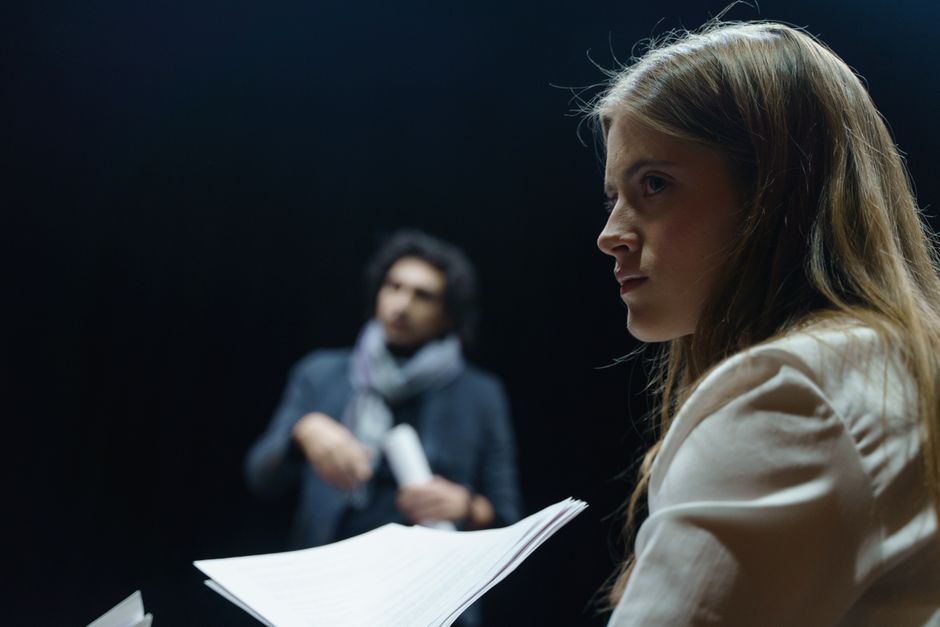
Rehearsals for the play "Eichmann's Trial" continue in central Tel Aviv, even as the production remains unable to premiere at its intended historic venue due to ongoing conflict. The play was scheduled to open late last month at the same Jerusalem venue where Adolf Eichmann was put on trial in 1961, marking the 65th anniversary of that landmark proceeding.
Haaretz reported that the U.S.-Israeli war with Iran has affected the timing of the production, leaving the actors still rehearsing in Tel Aviv rather than performing in Jerusalem. The article, by Talia Banon Tsur and published at 08:16 AM on April 08, 2026 IDT, documents how fighting and air-raid alarms have halted shows but not rehearsals.
The Human Cost of Disruption
The ongoing conflict has prevented the play from opening at a venue laden with historical significance—the very courtroom where one of the most important trials in Holocaust history took place. The 1961 trial of Adolf Eichmann, a key architect of the Holocaust, was a watershed moment in confronting genocide and establishing accountability for crimes against humanity. The inability to stage this production at that location represents not just a logistical challenge but a disruption of collective memory and cultural continuity during wartime.
The article noted that actors have persisted with their work despite the dangerous conditions. One actor was quoted as saying, "this profession is more than just a livelihood; there's a kind of physical need for it." The statement underscores how cultural workers continue their labor even when public safety concerns and military conflict make performance impossible.
Cultural Work Under Siege
The piece was tagged with 2026 Israel-Iran War, Tel Aviv, Israeli culture and Holocaust, situating the theatrical production within the broader context of regional conflict. The rehearsals in central Tel Aviv reflect the reality that cultural institutions and workers must adapt to wartime conditions, moving their work away from intended venues and audiences while maintaining their commitment to historical memory and artistic expression.
The play's focus on the Eichmann trial—a moment when the international community confronted the machinery of genocide and established principles of individual accountability for mass atrocities—takes on additional resonance during a period of active conflict. The production represents an effort to sustain engagement with difficult historical truths even as contemporary violence shapes daily life.
Why This Matters:
The disruption of this Holocaust memorial production reveals how armed conflict affects not just immediate physical safety but also the cultural infrastructure that sustains collective memory and historical accountability. The inability to stage "Eichmann's Trial" at the historic Jerusalem venue where Eichmann faced justice 65 years ago represents a tangible loss of connection to a landmark moment in confronting genocide. Cultural workers' persistence in rehearsing despite air-raid alarms demonstrates the human cost of maintaining artistic and educational work during wartime, while also highlighting the resilience required of those who labor to preserve historical memory. The fact that a play about accountability for crimes against humanity cannot be performed as planned during an active war underscores the fragility of the institutions and spaces that enable societies to reckon with their past and present.