
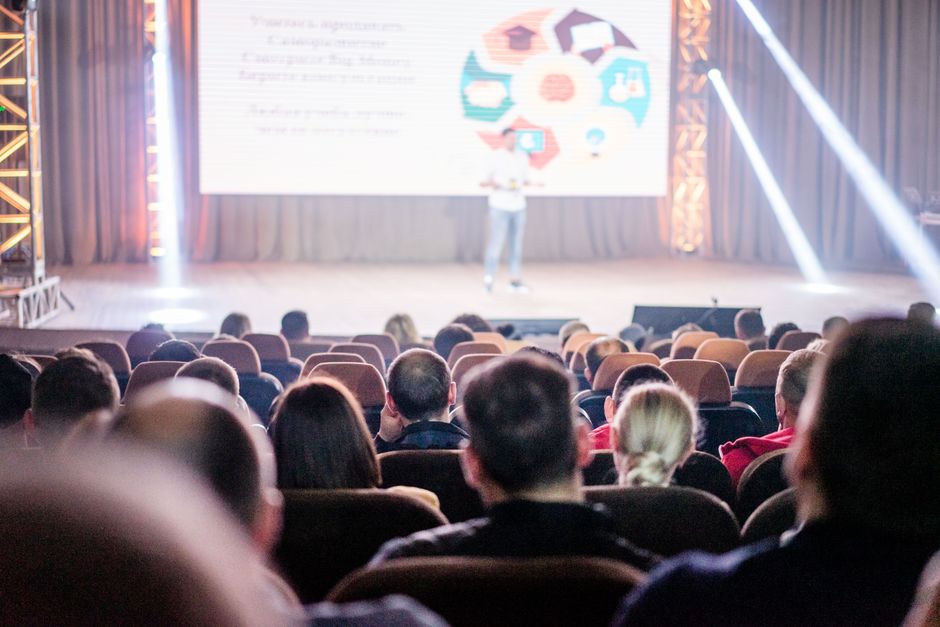
An international conference bringing together Jewish and Kurdish leaders, scholars, academics, journalists, activists and civil society representatives opened in London on Sunday, with organizers saying it aims to turn 2,700 years of shared history into stronger political, cultural, academic and diaspora cooperation. The gathering, titled “Jewish–Kurdish Relations in a Changing Middle East: History, Identity and Future Cooperation,” was organized and hosted by the Jewish Kurdish Network (JKN) London, alongside co-hosting partners the London Center for the Study of Contemporary Antisemitism and the Tel Aviv University Moshe Dayan Center Kurdish Studies Department. People traveled from Israel, the United Kingdom, Europe, the United States and across Kurdistan to attend.
A Conference of Institutions
The event put state-linked and academic institutions front and center. Organizers said the conference explores one of the Middle East’s oldest relationships, noting that Jewish and Kurdish communities lived side-by-side for approximately 2,700 years across Kurdistan and the wider region. They said that shared history is reflected today in a large Jewish community of Kurdish heritage living in Israel and Kurdish communities spread across the Middle East and a substantial international diaspora.
JKN spokespersons said, “For thousands of years, the ancestors of Jews and Kurds lived side-by-side. Thousands of years later, their great-great-grandchildren have come together in London because we believe that this relationship should not belong only to history.” They said both peoples understand what it means to fight for identity, survival and self-determination, and said the aim is “to take the friendship and historical connection between our peoples and turn it into something meaningful for the future, through education, research, political dialogue, cultural exchange, and stronger relationships between our diasporas.”
The language is all about connection, but the machinery behind it is familiar: conferences, departments, networks, and policy talk. The people in the room are not just community members. They’re also the kind of intermediaries who turn lived history into institutional programs, and institutional programs into respectable influence.
Power Speaks in Video Messages
The conference screened a special video address from Israeli Foreign Minister Gideon Sa’ar, who greeted attendees and expressed support for the event. Sa’ar highlighted the long-standing friendship between the Jewish people and the Kurdish nation in the Middle East. He said the Kurdish people are a minority spread across four countries and have not yet achieved political independence, and he said he believes in strengthening relations among minorities in the Middle East, particularly between Jews and Kurds.
That’s the state speaking in the language of minority solidarity. Sa’ar’s remarks framed the Kurdish question through the familiar grammar of political independence, while the conference itself remained anchored in elite diplomacy and academic respectability. No one in the room was handing power over to ordinary people. They were building a network.
Lisa Mira, an Israeli Jew who spends time in Iraqi Kurdistan supporting Yazidi genocide survivors, also addressed the gathering. She described her grassroots humanitarian work and the psychological scars carried by women and children rescued from ISIS captivity. “We are Jews, and you are Kurds, and we have to fight with all our might for this generation,” Mira told the assembly, recounting how survivors often return stripped of identity and deeply traumatized. She added, “We have a generation of kids who are born in ISIS – their mother and father were the caliphate. When they were finally extracted, they have no one, but they have us.”
From Dialogue to Action, or Back to the Same Table
The conference program featured seven expert panels on Jewish life in Kurdistan and shared heritage; Zionism and Kurdish national identity; regional transformation and Western policy; genocide, trauma and collective memory; women and civil society; diaspora politics and advocacy; and the role of young Jews and Kurds in shaping the future. Cultural elements included a screening of Kae Bahar’s film No Friends But Mountains and traditional live Kurdish music.
A central focus of the second day is a roundtable titled “From Dialogue to Action: Building a Long-Term Kurdish–Jewish Partnership,” which addresses how relationships established through dialogue can develop into practical cooperation involving universities, civil society organizations, cultural institutions, policymakers and younger generations. That’s the old formula: talk, institutionalize, repeat. The language of action arrives neatly packaged inside universities and policy circles, where dissent gets translated into partnership and partnership gets translated into access.
Kurdish-Swedish journalist and speaker Suzan Quitaz said, “The former mayor of Diyarbakir presented a symbolic gift to Prof. Ofra Bengio from Tel Aviv University, whom the esteemed event dubbed the ‘Mother of the Kurds.’” Quitaz said there were “powerful speeches of the distortion of genocide and ‘re-inventing’ to suit a current political agenda,” and added, “The feeling among attendees is that Israel is not just an ally but rather, ‘we Kurds and Jews are one family.’”
Organizers said the conference comes at a critical juncture for both peoples, as Kurdish communities in Iraq, Syria, Iran and Turkey face ongoing political and security challenges and Jewish communities worldwide navigate a sharply transformed environment following the October 7 attacks. A JKN spokesperson said, “This conference is not about claiming that Jews and Kurds agree on everything. Neither community speaks with one voice. What matters is that we are creating a space where people can meet directly, learn from each other, and identify the areas where genuine cooperation is possible.” She added, “There is something very powerful about Kurdish and Jewish people sitting together and talking about history, identity, persecution, and survival – but also refusing to define ourselves only through suffering. We want to talk about what we can create together.”
The organizers said they hope the London 2026 conference will mark the beginning of a more sustained international network. “If people leave London with new friendships, new research projects, new institutional connections, and a determination to continue working together, then this conference will have achieved something important,” they said. “We are honoring 2,700 years of shared history, but our real responsibility is to decide what the next chapter will look like.” The next chapter, at least in London, looks a lot like the old one: elites, institutions, and carefully managed cooperation, with ordinary people invited in as heritage, testimony, and audience.