
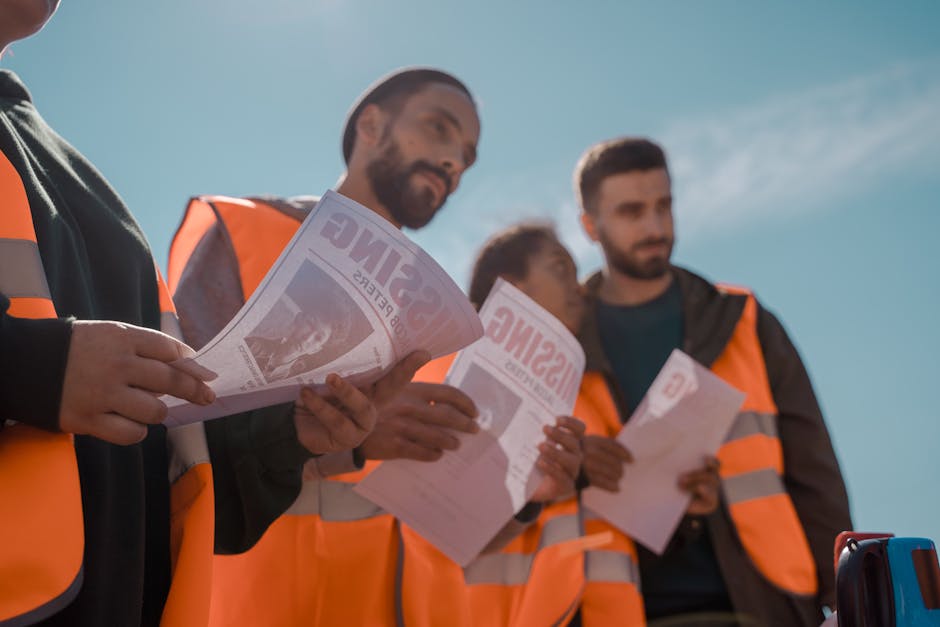
Mexico's government revealed today that approximately 40,000 of the nation's roughly 130,000 disappeared persons may still be alive, offering a glimmer of hope to families while underscoring the magnitude of the country's ongoing security crisis. Simultaneously, the United States issued new general licenses related to Venezuela, signaling a recalibration of Washington's approach to the troubled South American nation.
The Mexican announcement represents a significant acknowledgment of the scale of disappearances that have plagued the country for years, though the qualifier "may be alive" reflects the profound uncertainty surrounding the fate of tens of thousands. With approximately 130,000 total disappeared persons on record, the government's assessment suggests that roughly 31 percent of these cases could potentially result in recoveries—a possibility that carries both hope and the sobering reality that verification remains incomplete.
Mexico's Disappearance Crisis and Governance Challenges
The persistence of mass disappearances in Mexico reflects broader failures in state capacity and rule of law that have undermined public safety and economic confidence. For years, organized crime organizations have operated with relative impunity in many regions, exploiting weaknesses in law enforcement coordination and judicial systems. The government's acknowledgment today that a substantial portion of the disappeared may still be alive suggests that many cases involve kidnapping, trafficking, or forced labor rather than immediate fatalities—a distinction that, while offering hope to families, also indicates the systematic nature of criminal enterprises operating within Mexican territory.
This situation directly impacts Mexico's economic prospects and bilateral relationship with the United States. Investors and businesses require stable, secure environments to operate. When disappearances reach such staggering numbers, it signals to international markets that property rights, personal security, and rule of law cannot be taken for granted. The Mexican government's need to make public statements about the potential fate of the disappeared underscores how far institutional capacity must improve to restore confidence.
From a center-right perspective, this crisis demonstrates the critical importance of strong institutions, effective law enforcement, and judicial systems that can protect citizens and property. Market-driven economic growth cannot flourish without these foundational elements. Mexico's challenge is not primarily one of wealth redistribution but of establishing the governmental competence and security infrastructure necessary for prosperity to take root.
US Venezuela Policy Recalibration
The United States' issuance of new general licenses related to Venezuela indicates a reassessment of sanctions policy toward the Nicolás Maduro regime. General licenses typically provide exemptions or clarifications regarding prohibited transactions, suggesting the Biden administration may be adjusting its approach to certain economic activities or humanitarian considerations.
This policy shift warrants scrutiny from those concerned with maintaining pressure on authoritarian regimes. Venezuela's government has systematically dismantled democratic institutions, confiscated private property, and created one of the Western Hemisphere's worst humanitarian crises, generating mass migration flows that have reached American borders. Any relaxation of economic pressure must be carefully calibrated to avoid strengthening a regime that shows no commitment to democratic reform.
Conversely, targeted licenses can serve legitimate purposes—facilitating humanitarian aid, maintaining diplomatic channels, or creating space for private sector activity that might eventually undermine regime control. The critical question is whether these licenses represent strategic flexibility or a drift toward engagement that abandons pressure on authoritarianism.
Why This Matters:
These two developments illuminate fundamental challenges in the Americas that demand serious policy attention. Mexico's missing persons crisis represents a governance failure with profound human costs and economic consequences. When citizens cannot be assured of basic security, entrepreneurship withers, investment flees, and social cohesion deteriorates. The solution requires institutional strengthening—better law enforcement training, judicial reform, and anti-corruption measures—not merely increased spending on social programs. Center-right governance emphasizes that sustainable prosperity flows from competent institutions and rule of law, not from redistributive policies. Mexico's government must demonstrate capacity to protect its citizens and enforce property rights if it hopes to attract the investment necessary for broad-based economic development.
The Venezuela policy adjustment raises questions about consistency in American foreign policy toward authoritarian regimes. The United States has long maintained that economic pressure, combined with support for democratic opposition forces, represents the most effective long-term strategy for promoting regime change without military intervention. Any dilution of this approach should be justified by clear strategic benefits rather than driven by bureaucratic inertia or misplaced optimism about regime intentions. Both issues ultimately reflect the ongoing tension between idealistic aspirations and pragmatic governance—a tension that center-right policy must navigate carefully, maintaining principled commitment to free markets, individual liberty, and democratic governance while acknowledging the complex realities of international relations and institutional capacity.