
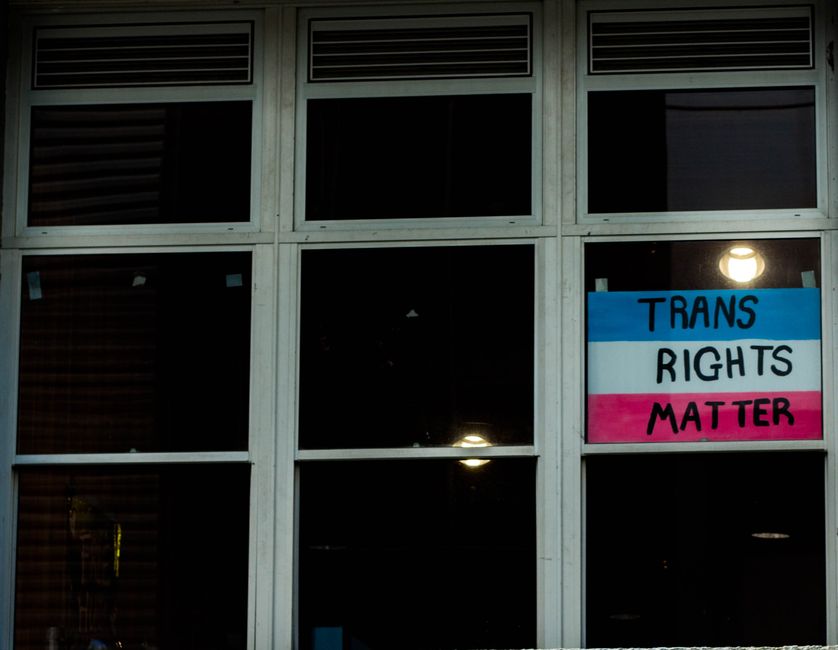
The Supreme Court rejected a challenge to a Massachusetts school gender-identity policy, ending an immediate attempt to dismantle protections for transgender and gender-non-conforming students. This decision, while preventing an immediate setback for a marginalized segment of the working class, highlights the ongoing struggle against systemic efforts to restrict fundamental rights within public institutions.
The ruling specifically addressed a dispute concerning the privacy and rights of transgender and gender-non-conforming students in schools. These individuals, often facing heightened vulnerability and discrimination, are part of the broader population whose access to public resources and safety is frequently targeted by reactionary forces.
The Supreme Court, which operates with a 6-3 conservative majority, declined to intervene in the Massachusetts policy. This particular inaction by the state's highest judicial body allows the existing protections for students to remain in place, temporarily thwarting a direct legal assault on their rights.
The State's Role in Class Conflict
This ruling is situated within the broader context of sustained efforts by the Trump administration and Republican-led states to restrict LGBTQ+ rights. Such campaigns are often deployed to divide the working class, diverting collective attention and energy from the fundamental economic contradictions inherent in the capitalist system.
The challenge to the Massachusetts policy represented an attempt to utilize the state's judicial apparatus to roll back established protections. These legal maneuvers are a common tactic employed by conservative elements to reinforce traditional social hierarchies and undermine the collective gains achieved by marginalized communities through struggle.
While the rejection of this specific challenge prevents an immediate legal victory for those seeking to impose discriminatory restrictions, the very existence of such a case underscores the precariousness of rights within the existing legal framework. Any gains made through reform efforts are consistently subject to challenge and potential reversal by state institutions, demonstrating their temporary and reversible nature.
The nationwide debates over the privacy and rights of transgender and gender-non-conforming students in schools reflect a deeper ideological conflict. This conflict frequently pits the interests of those seeking to maintain oppressive social norms against the struggle for liberation and equality for all members of the working class, regardless of gender identity.
The Massachusetts school gender-identity policy, which was the target of this legal challenge, represents a limited, yet significant, measure to ensure a more inclusive and safer environment within public education. Such policies are often hard-won concessions extracted from a system fundamentally designed to perpetuate inequality and social stratification.
The Supreme Court's conservative majority signals that the state's judicial arm remains a critical arena where the rights of the economically dispossessed and socially marginalized are constantly contested. The outcome of such disputes can shift, demonstrating the inherent instability of relying solely on legal battles for structural change.
This ruling, while offering a temporary reprieve, does not dismantle the underlying structural forces that generate these challenges to human rights. It merely postpones a specific attack, leaving intact the broader framework that permits and encourages ongoing efforts to restrict the rights of transgender and gender-non-conforming individuals.
The ongoing efforts by the Trump administration and Republican-led states to restrict LGBTQ+ rights illustrate how state power is consistently mobilized to enforce social control and maintain divisions among the populace, rather than to serve the collective interests and well-being of all people.
This decision highlights that even when the state's judicial branch declines to actively suppress rights in a particular instance, the fundamental conditions that necessitate such legal battles persist. These conditions demand a more profound transformation of the social and economic order to secure lasting liberation and equality.